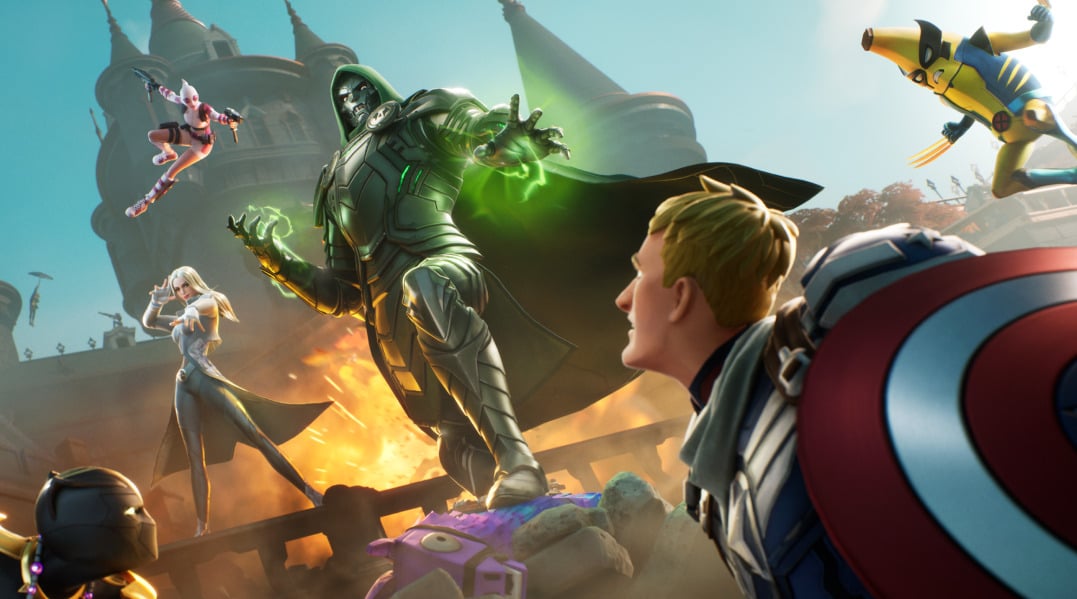
Epic Games has delayed its unannounced Disney shooter and told the team building it to stop writing code by hand. That is the core of a Bloomberg report by Jason Schreier published Monday, October 12, 2026, and within hours Epic CEO Tim Sweeney confirmed the broader direction on X: "We have a huge pivot underway here at Epic, moving developers around to retool for maximum AI acceleration."
Studios have been experimenting with generative AI for years, mostly quietly and mostly at the edges. What makes this different is the scale and the source. According to Kotaku's write-up of the Bloomberg report, no major gaming company has yet made AI the foundation of its development pipeline at this level. And Epic isn't just any studio. It makes Unreal Engine, which a large share of the industry builds on.
Per Bloomberg, Epic's Marvel and Star Wars shooter with Disney, which had been due in March 2027, no longer has a release date. Staff were told to go "AI first" using tools including Anthropic's Claude. A director's email called for "no more hand-written code" and art "generated with full AI workflows." Bloomberg's sources say the delay itself came from understaffing and slow progress, not from AI. Sweeney confirmed a company-wide AI pivot but didn't comment on the Disney game.
What Bloomberg reported
The game is an unannounced shooter that features Marvel and Star Wars characters. It is part of the partnership Disney started in 2024, when it invested $1.5 billion in Epic. Several outlets relaying Bloomberg's report, including Kotaku and The Next Web, say the game had been scheduled for March 2027 and has slipped to an unspecified later date.
Bloomberg's sources gave fairly ordinary reasons for the delay. Development was running behind, and the team was short-staffed. Several outlets summarizing the report say Epic had misjudged how many people and how much time the project would need. The bigger news is what came with the delay: a new production model for the game.
According to Game Developer's summary, the game's director wrote in an email reviewed by Bloomberg that the game's art should be "generated with full AI workflows" and that there should be "no more hand-written code." Developers were told that AI tools, including Anthropic's Claude, would be the default way of producing the game, with humans guiding and overseeing the output.
Bloomberg reported that many developers on the project reacted with confusion and shock. Kotaku also notes Bloomberg's point that it is unclear what safeguards exist to catch AI mistakes and keep low-quality output out of the finished game. Disney has not commented publicly.
What Epic and Sweeney actually said
Epic's official response was brief. Communications director Jake Jones told reporters the company is "embracing AI-accelerated development, led by Epic developers who are the visionaries and creative drivers for everything we do." Neither the statement nor Sweeney's posts address the Disney game's schedule directly.
Sweeney went further on X. According to AFP's report, carried by Khaleej Times on October 13, he wrote that the aim "isn't to do the same stuff with fewer people, but to enable everyone here to build MORE and BETTER stuff," and to pass those gains on to every team that uses Unreal. He also said heavier internal AI use would help Epic "survive the AI revolution, help other developers do the same."
One reply told Sweeney that his "inability to read the room is really really astounding." AFP reports that Sweeney answered that Epic's job, as a toolmaker for much of the industry, is to design for the present and for the future that is coming, and that he is "optimistic" and sees AI as "empowering for creators."
The layoffs are the elephant in the room
The phrase "not fewer people" lands differently at a company that just made deep cuts. On March 24, 2026, Epic announced it was cutting about 1,000 jobs, as reported at the time by Bloomberg Law and others. Sweeney blamed a drop in Fortnite engagement that began in 2025 and spending well above revenue. Per The Next Web, Sweeney's staff note at the time said "the layoffs aren't related to AI." It was Epic's second big round in roughly three years, following a 2023 cut of about 830 people.
There's no evidence the AI pivot is a disguised headcount plan, and Epic says explicitly that it isn't. But the sequence is hard to ignore: a large layoff for financial reasons, then a project reported to be behind schedule because it was understaffed, then a directive to fill the gap with AI tooling instead of hiring. That is the context in which developers inside and outside Epic are reading Sweeney's posts.
Epic is already shipping AI-built software
This isn't only a memo. Two days after the Bloomberg story, on October 14, Epic opened the announcement of its rebuilt Epic Games Launcher with: "Programming is hard. So, instead of doing that, we vibe coded a new Epic Games Launcher." According to The Next Web, the new launcher is in Preview for Windows, macOS and, for the first time, Linux. Epic Games Store general manager Martin Keely told PC Gamer the team started from scratch with a completely new architecture.
Epic says the launcher starts in 5.47 seconds against 10.07 seconds for Steam, in tests run by Keywords Studios. The Next Web notes that Ars Technica's own check found it reaches the store a few seconds faster than Steam. Epic calls the release "a speedboat and not a yacht": the Preview is missing some social features and account options, and it doesn't support Intel Macs. A launcher is a much smaller and more forgiving project than a Marvel and Star Wars shooter. Still, it's the first visible product of the approach Epic is now pushing onto its biggest game.
Why this matters beyond one delayed game
The part of Sweeney's post with the most reach is about Unreal, not Fortnite. Commentary on the Bloomberg report, including Schreier's own, points out that Epic's aim is to bring these same AI workflows to other studios through the engine. That plan was already public. At its State of Unreal keynote in June 2026, Epic said Unreal Engine 6 would integrate models including Claude and Gemini, exposing the engine through a Model Context Protocol layer so studios can bring the models they prefer. Unreal Engine 5.8 already ships an experimental MCP plugin that connects models like Claude to Unreal projects.
So the Disney shooter is effectively becoming Epic's in-house test of whether a large, licensed, high-profile game can be built this way. If it ships on a reasonable timeline at a quality Disney accepts, Epic gets a strong sales pitch for Unreal Engine 6. If it slips again or ships with obvious AI-generated art, the industry learns that too, in public.
The workforce Epic is selling to is skeptical. The Next Web, covering the Unreal Engine 6 plans, cites a GDC survey in which 52% of respondents said they believe generative AI is harming the games industry. Player reaction has been harsh as well: FRVR documented a wave of "RIP Epic" replies from Fortnite fans, and Kotaku notes that earlier attempts by game companies to lean on generative art have drawn heavy online backlash. Kotaku also points out that Sweeney has criticized Steam for requiring developers to disclose AI use, so Epic's own storefront is unlikely to push studios toward labeling it.
What we still don't know
Almost everything about the game itself comes from one Bloomberg report and the outlets relaying it. Epic hasn't officially announced the game, its title or a new date. Neither Epic nor Disney has confirmed the wording of the director's email. It's also unclear how literal "no more hand-written code" is meant to be in daily work, whether it means engineers reviewing and steering AI-generated code or something stricter. And Bloomberg itself noted that it's unclear what safeguards exist to catch AI mistakes.
What is confirmed is the direction. Epic's CEO says the company is reorganizing around AI, its spokesperson says AI-accelerated development is the plan, and it has already shipped a launcher built that way. The Disney game is where that strategy will either prove itself or fall apart.
Has Epic confirmed the Disney game is delayed?
Not directly. The delay and the March 2027 target come from Bloomberg's October 12 report. Sweeney confirmed the company-wide AI pivot, but he didn't comment on the Disney project.
Did AI cause the delay?
According to Bloomberg's sources, no. The game was behind schedule and understaffed. The "AI first" directive came alongside the delay as a separate change in how the game will be built.
Does this affect studios that use Unreal Engine?
Not immediately. But Sweeney says Epic wants to bring these workflows to every Unreal team, and Unreal Engine 6 is being built with Claude and Gemini integrations through a Model Context Protocol layer.